Book A Show For Your Event or School

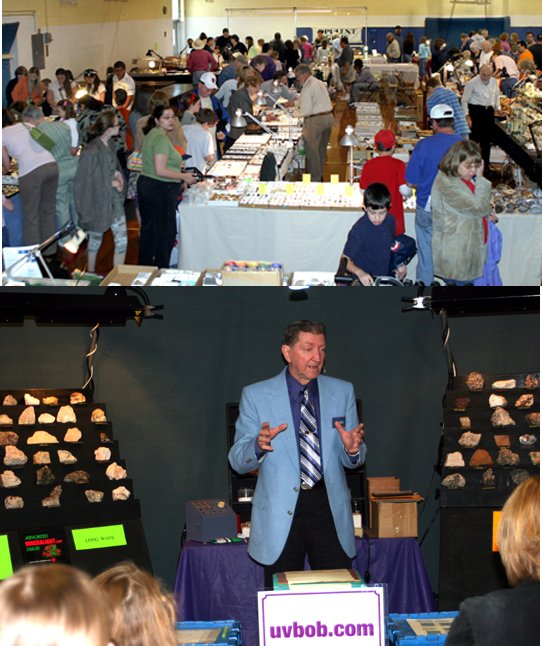
You can have UV Bob bring all of the fun and excitement directly to your event. We can tailor a show to your needs so contact us today for available dates. Click HERE for more details.
You can have UV Bob bring all of the fun and excitement directly to your event. We can tailor a show to your needs so contact us today for available dates. Click HERE for more details.
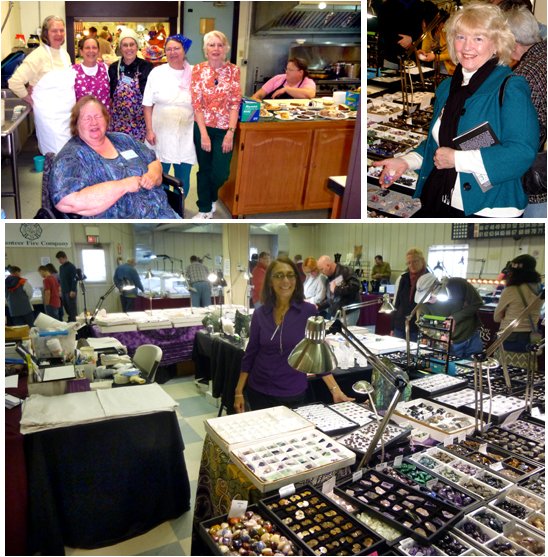
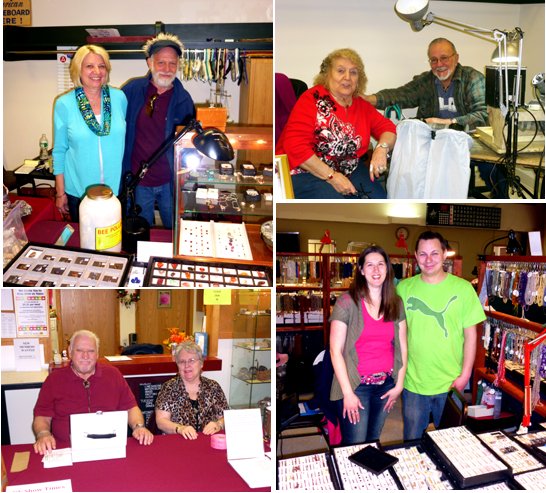
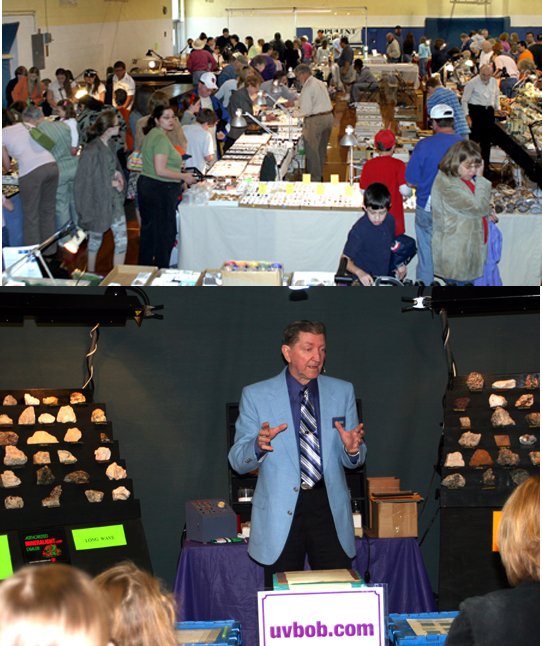
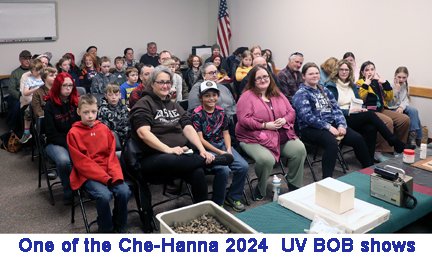
The 2025 Che-Hanna Rock and Mineral Show was a big success. Four of my five UV programs were standing-room-only. We even had a bus load of excited folks from a retirement home.

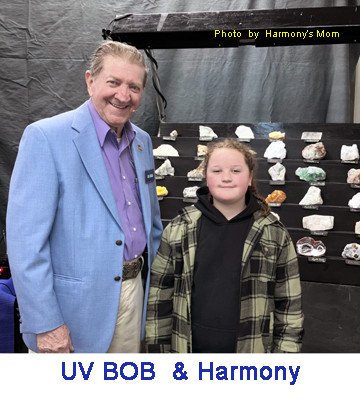
Some of my helpers at one of my programs came up front after the program to get a photo with me. One of the gals even had me autograph the mineral ID label of the specimen she got. She said she wasn’t going to put it on eBay.

See what happens every year, one or more alumni folks show up at one of my programs. Some have been back as many as 14 years. I hope that they were there to enjoy the programs and not just see if I am still alive.

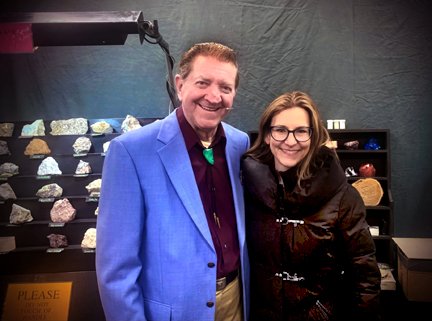
Dear Mr. McGuire,
Thank you for the photo. My dad, Hal Lambert, brought me to one of your shows in about 1984, and it sparked a lifelong interest in rocks. Thank you for such a precious memory.
Sincerely,
Eileen Hall
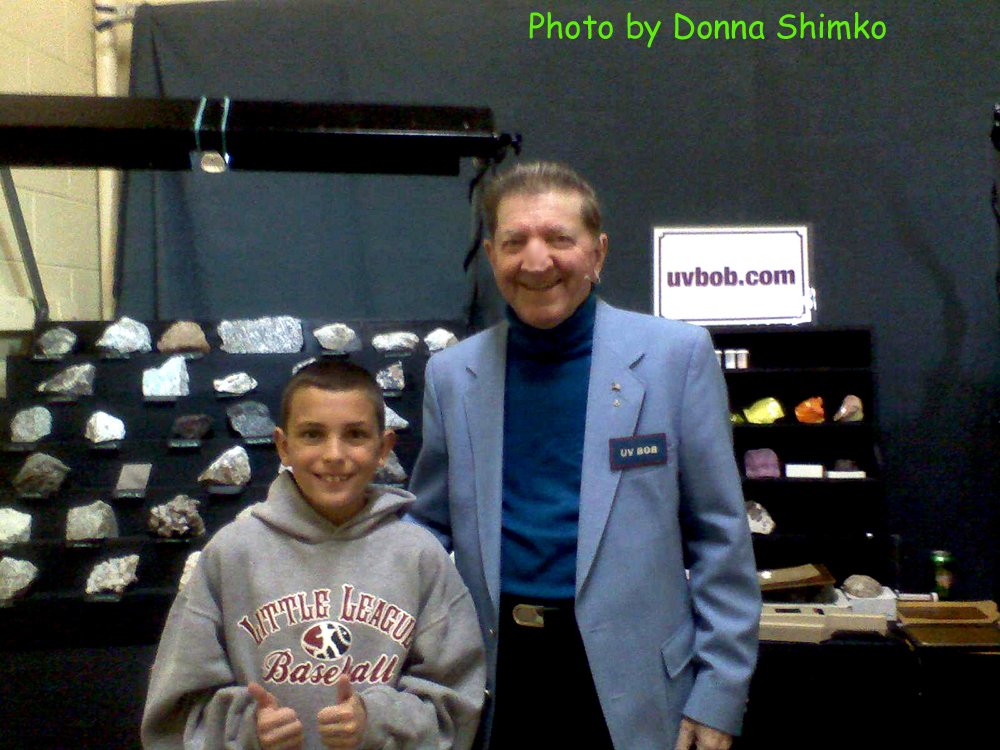
Stanley Shimko Jr. gives two thumbs up after seeing the UV program by UV BOB. Five programs were given by UV BOB at The Mineralogical Society of Northeastern Pennsylvania’s 13th Annual Gem and Mineral Show held at Oblates of St. Joseph in Pittston, PA.
I attended the UV Bob show and was amazed at how cool it was. There were glow-in-the-dark rocks that changed colors in different light. My brothers and cousin got to volunteer for a demonstration and will not stop talking about the experience they had. We were all impressed at how many different samples and minerals UV Bob had on display. He also talked a lot about the usefulness of fluorescence in our daily lives. He had lots of good stories and antidotes. I learned a lot and my bothers and cousin want to try some of the experiments he suggested. If you get a chance to see a show by UV Bob, I would suggest you attend. It is a lot of fun and a great learning experience.
-Ayden Kennedy
I saw one of UV Bob’s programs and was amazed by all the different rocks I saw on display. When he first showed us all the rocks they looked normal other than some odd shapes. Most of them were brown, grey, and earthy colored, but when he turned on the long and short waved UV lights the rocks were orange, red, green, yellow, purple, and basically a rainbow of colors. One of my favorites was the glowing sphere he showed us, I even bought one of my own online after the show. I was surprised to see that the rocks were from all over the U.S. mostly from different states. The show was very entertaining for young children and adults as well. His show gave children the opportunity to interact with the program and provided educational information for adults also. The show was even better because you could tell UV Bob was passionate about the topic and he wasn’t just spitting out facts. UV Bob also had many cool pieces of artwork that included the same type of phosphorescent materials which made the show even more interesting. If I had the chance I would definitely like to see UV Bob’s presentation again.
-Jennifer Brown
Fluorescent minerals seem to fascinate anyone who sees them. There is a reason why such a large crowd gathers in Franklin, New Jersey every April to observe the “Fluorescent Wall”. I met Bob McGuire (UV-Bob) for the first time last year at the Wayne County Gem and Mineral Show in upstate, New York. As a professional geologist and mineral collector I could appreciate the variety of minerals in his displays and Bob’s unique and clear description of the awesome property of mineral fluorescence. But watching the children in the audience of his show react to his well planned and enthusiastically presented program was perhaps even more satisfying. Kids, and their parents, are observed learning a little mineralogy and having fun doing it. Bob involves the children in the audience in his fascinating demonstrations and rewards them for their participation. If you attend a show where UV Bob is presenting, or if you need a fun family style educational program for your school or club, I highly recommend Bob’s travelling mineral and light show.
-Fred Haynes, March 11, 2015
An enduring geological mystery. A world-famous mineral deposit. And, it’s all right here in New Jersey, just an hour’s drive from midtown New York!
The industrial complex that was once the Sterling Hill zinc mine is now open to the public as the Sterling Hill Mining Museum. Join us for underground mine tours, fantastic displays of “glow-in-the-dark” fluorescent minerals, extensive outdoor displays of mining machinery, and exhibit halls packed with things you’ve probably never seen before!
Click HERE to go directly to their website.
Dear Mr. McGuire,
Thank you for this afternoon’s presentation. Your presentation was completely interesting and engaging. You should consider a career in the entertainment field, or as an educator. If all else fails, politics may suffice. Seriously, I am the big guy you asked to help with your concentration demonstration today. Your presentation was terriffffffffic! as always. That is, my kids and I have attended your show in Athens for three years in a row, and hope to do so again next year. Thank you for the gift specimen. For the good of the hobby, I will pass it on to a worthy junior.
Joe Healey
Environmental Scientist